

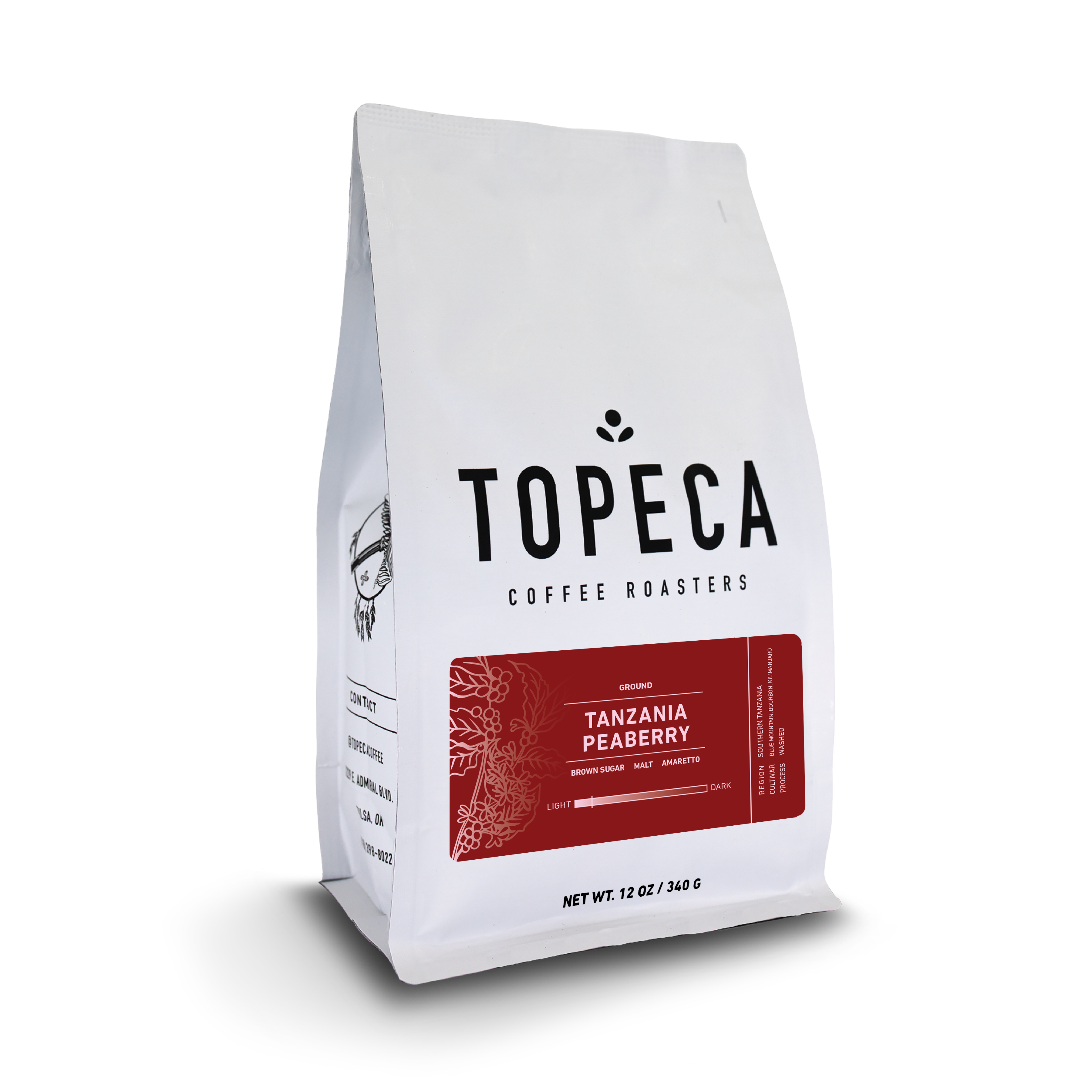
Tanzania Peaberry
Tanzania Peaberry
Tanzania Peaberry
Tanzania Peaberry
Tanzania Peaberry
Tanzania Peaberry

Tanzania Peaberry

$18.99
ABOUT THIS PRODUCT

This Tanzanian peaberry has a classic flavor profile one would expect of the region, with a brown sugar sweetness, a malty middle, and an almond-forward finish, reminiscent of amaretto. This coffee is as clean as it is balanced.


Tanzania is one of the most biodiverse nations in Africa, with a wealth of natural beauty. From the peak of Kilamanjaro and the savannas of the Seringeti in the north, to the shores of Lake Malawi to the west, and the coast of the Indian Ocean to the east, Tanzania has a little bit of everything. The history of coffee in Tanzania is a familiar yet complicated one, as it was the Haya people who first brought coffee to the northernmost reaches of the country, chewing coffee cherry for the stimulating effects of caffeine rather than processing, roasting and brewing it as a beverage. There is no definitive date on when coffee was introduced to the country, but it had been in the country, growing wild, for centuries before European colonization of the region. It was only after the European colonization of the region that systemic and widespread coffee agriculture began to take root in the late 1800’s. Yet, it wasn’t until 1964 that the nations of Tanganyika and Zanzibar united and won independence from Britain, combining the names of their nations to form one unified nation. Thus, the Republic of Tanzania was added to the growing list of independent African countries that began to secede from the influence of colonizing nations in the 1900’s. It took the better part of thirty years for coffee agriculture in Tanzania to ramp up into the powerhouse it has become today, as it was only after a series of dedicated reforms that enabled producers across the country to forge direct trade relationships and streamline their production processes, causing exports to rise year after year. Since the 1990’s, Tanzanian coffee producers have produced millions of tons of world-renowned coffees, primarily becoming known for lots of clean and balanced washed process peaberry. While many advancements have been made in the local industry, the majority of Tanzanian coffee is still grown by smallholder producers who unite to form cooperatives all across the country. This lot is among many of those grown by single estate farmers who work together to process and export their finished coffees to the global market.


Region: Southern Tanzania

Producer: Smallholder Producers

Cultivar: Blue Mountain, Bourbon, Kilimanjaro

Process: Washed

Altitude: 1200-1800 Masl

Roast Degree: Light

Importer: Cafe Imports

Flavor Notes: Brown Sugar, Malt, Amaretto

Pairs well with

Frequently Asked Questions

ALL orders, regardless of shipping method chosen, typically takes 1-2 business days from the date of order for us to roast, package, and ship.

We ship to the entire United States via the US Postal Service and UPS. Transit times typically take 1-5 days depending on how far away you are from Tulsa, OK. Once your order is in the hands of of the postal carrier, we do not have any control over how quickly the package is delivered.

We are roasting coffee daily, Monday-Friday. We aim to fulfill online orders with coffees between 1-7 days off roast, so that when it is delivered to you it's had time to degas and is ready for brewing.

Coffee is best brewed after it has had time to degas (at least 5-7 days off roast). Coffee's aroma will be at its peak intensity and freshness within the first month after roasting. So, if you are planning on signing up for a subscription, it's best to order for a month's supply at a maximum if you are looking to get the absolute best out of your beans.

No, these are natural flavors found in the coffee. Coffee is the seed of Coffee Fruit. Like any other fruit in the world there are 1000s of botanical varieties. Different varieties will have different flavor characteristics, a lot like wine.

Other things that impact a coffee’s flavor include where the coffee is grown, how the fruit is processed, how the seed is dried, how well the coffee is sorted, how the coffee is roasted, and lastly how you brew it.